
Kuviyam Intelligence Assurance
Post-market surveillance for deployed AI
Know how your AI is performing at every site, without waiting for ground truth.
Ki Assurance estimates the real-world sensitivity, specificity and PPV of deployed radiology AI from unlabelled production data, explains every shift causally, and delivers the evidence your PSUR, PCCP and AI Act file need. Label-efficient, and grounded in peer-reviewed research on post-deployment monitoring and algorithmic auditing.
1,230
radiology AI devices FDA-authorised as of June 2026, 76% of all AI devices. Almost none has a known real-world error profile at the sites running it.
14%
of chest X-rays reported as normal carry an unreported finding. The radiology report, the only scalable label, is wrong before the AI arrives and partly written by the AI after it.
1.6%
of FDA-cleared AI devices cite randomised evidence, while 43% of AI-device recalls happen within a year of authorisation.
The causal problem
Report concordance is not performance.
Every deployed monitor today grades the AI against the radiology report. Once the AI is live, the report sits causally downstream of it: when readers defer, concordance rises whether or not the AI is right. Ki Assurance treats the report as one contaminated observation and estimates performance from signals the AI cannot influence.
Label-free first
Prevalence, calibrated confusion matrices and corrected operating points are estimated from outputs, DICOM metadata and image embeddings, under assumptions we state and test.
Causal, not just drift
Every shift is typed, whether prevalence, acquisition, population, model version or feedback, and mapped to the action it actually requires: recalibrate, re-threshold, harmonise, retrain or audit.
Specialist time, budgeted
A small, fixed number of blinded reads per site per quarter, sampled where the estimators disagree, bounds the error. Tens of reads, not thousands.
Illustrative surveillance stream
Concordance drifts upward while the estimated operating point falls. Prototype projection on synthetic data.
Method
How it works
An edge collector at the site or inside your orchestration platform, a causal analytics layer, and a blinded reader protocol for targeted adjudication. No pixels leave the site.
- 1
Collect
AI outputs, de-identified DICOM headers and image embeddings from a frozen encoder, plus reference score distributions from your validation set.
- 2
Detect and type
Distribution tests on scores, embeddings and metadata decide whether the shift is prevalence, acquisition, population, version or reader feedback, with a posterior probability.
- 3
Estimate
Sensitivity, specificity, PPV and NPV per finding per site with confidence intervals, from prevalence estimation, calibration-based confusion matrices and prediction alignment.
- 4
Attribute
Discontinuity analysis at scanner installs, software updates and model versions, metadata mediation, and reader to AI discordance dynamics for automation bias.
- 5
Audit and report
Targeted blinded reads bound the estimate. A quarterly evidence pack carries the PSUR section, PCCP boundary check, parity tables, corrective action and a signed audit trail.
What you get
What changes in practice
The same events, seen two ways.
| Event | Report-concordance dashboard | Ki Assurance |
|---|---|---|
| ED protocol change doubles pneumonia prevalence | Concordance stable. Nothing flagged. | Prevalence shift. Sensitivity unchanged, PPV fell 0.41 to 0.32. Recalibrate. Zero reads required. |
| New CT scanner at one site | Concordance dips. Investigate. | Acquisition shift explained by a software version on one station. Alignment restores the operating point, 20 targeted reads confirm. |
| Readers increasingly accept AI flags | Concordance rises. The AI looks like it is improving. | Discordance fell in the uncertain band with no image change. Feedback shift. AI-blind reads scheduled, report validity down-weighted. |
| Model version updated under PCCP | No change visible. | Score-distribution discontinuity at the deployment date. Boundary check performed and documented. |
Regulatory fit
Built for the obligations you already have
Manufacturers carry a written duty to monitor real-world performance, and hospitals are acquiring one. Neither framework tells you how to get the labels. That is the gap we close.
United States
- FDA PCCP final guidance (Aug 2025): pre-specified performance boundaries and trigger evidence.
- FDA lifecycle draft guidance (Jan 2025): postmarket performance monitoring inside the QMS. QMSR in force Feb 2026.
- ACR/SIIM practice parameter (May 2026): facility-level real-world monitoring, Assess-AI compatible export.
European Union
- MDR Art. 83 to 88: PMS plan, PSUR (Class IIa every two years, IIb and III annually), PMCF and trend reporting.
- AI Act Art. 72 post-market monitoring, Art. 10 data governance, Art. 26 deployer duties.
- Applies to Annex I medical-device AI from 2 August 2028.
A monitoring plan that says we compare against radiology reports invites the question of report validity. A plan that states its estimators, assumptions, detection characteristics and label budget is defensible now and later.
Radiology AI manufacturers
Multi-site US and EU fleets facing a PSUR, FDA annual report or PCCP submission. Chest radiograph CADe and triage, CT emergent-finding triage, mammography, MSK.
Health systems and radiology groups
Running three or more AI tools with an AI committee to answer to. One normalised view across vendors, ACR practice-parameter compliance, AI Act deployer evidence.
Orchestration platforms
Embed an independent assurance layer your customers already ask for, without building causal estimation in-house.
Provenance
The method is built from our own published work
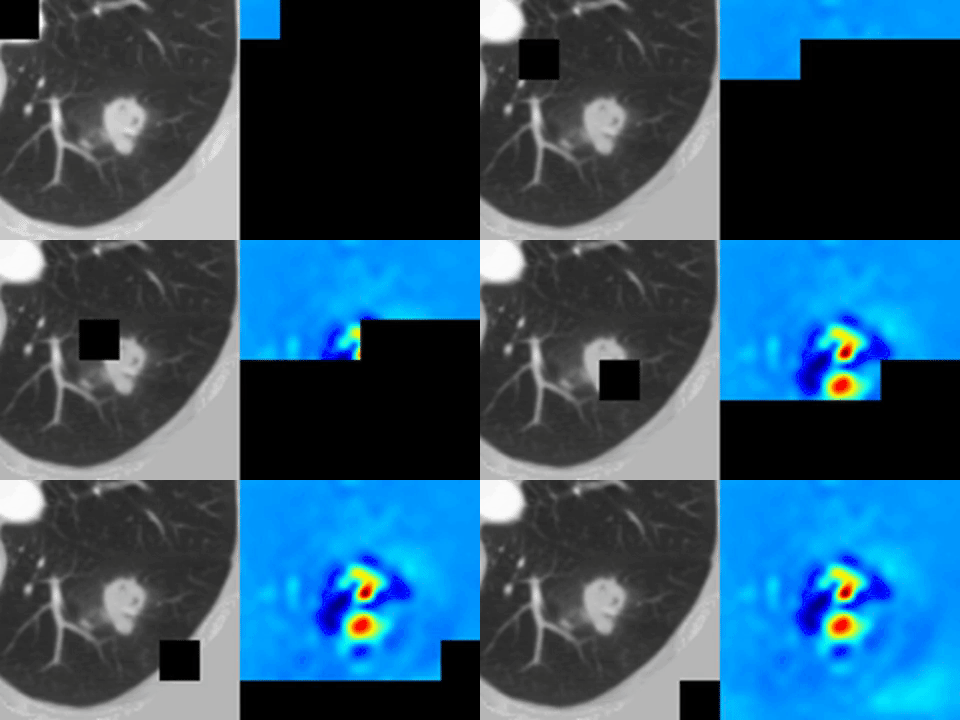
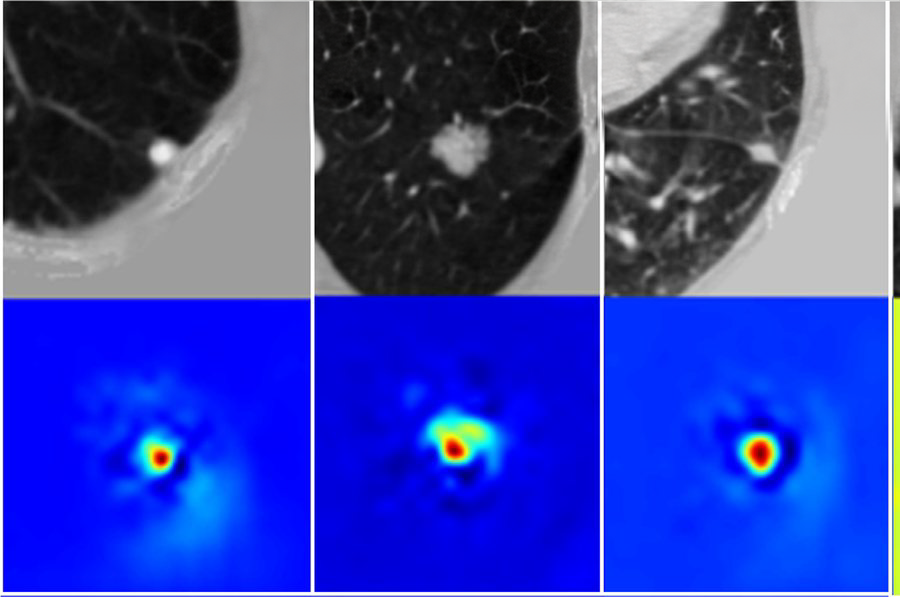
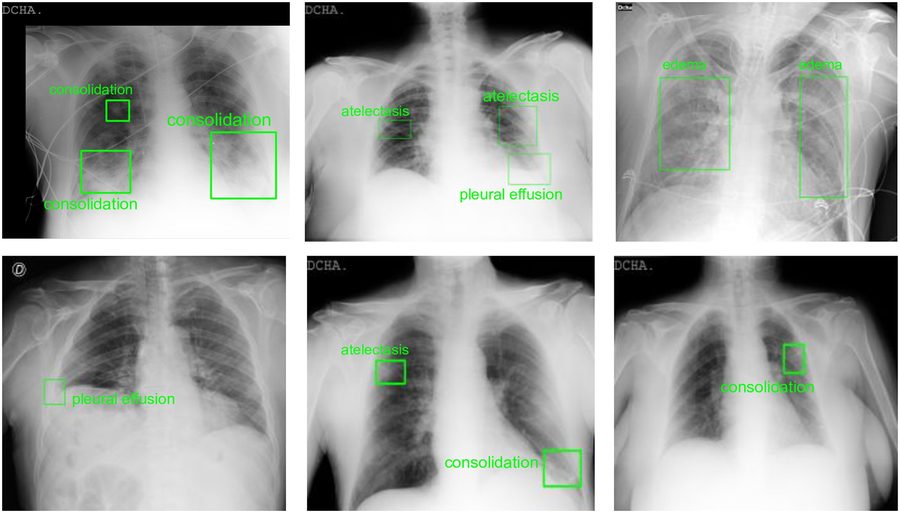
Ki Assurance productises a decade of research on how radiology AI fails after deployment and how to catch it without labels, spanning label-free monitoring, algorithmic auditing, explainability failure, fairness auditing and reporting standards.
Independence by design
Kuviyam builds clinical AI of its own, and we would rather say that plainly. Ki Assurance is kept separate from that work: it reports on whichever AI is actually deployed at a site, whichever vendor made it, and every re-read in the protocol is blinded to vendor, site and model output. The estimates are not shaped by anyone with an interest in the result.
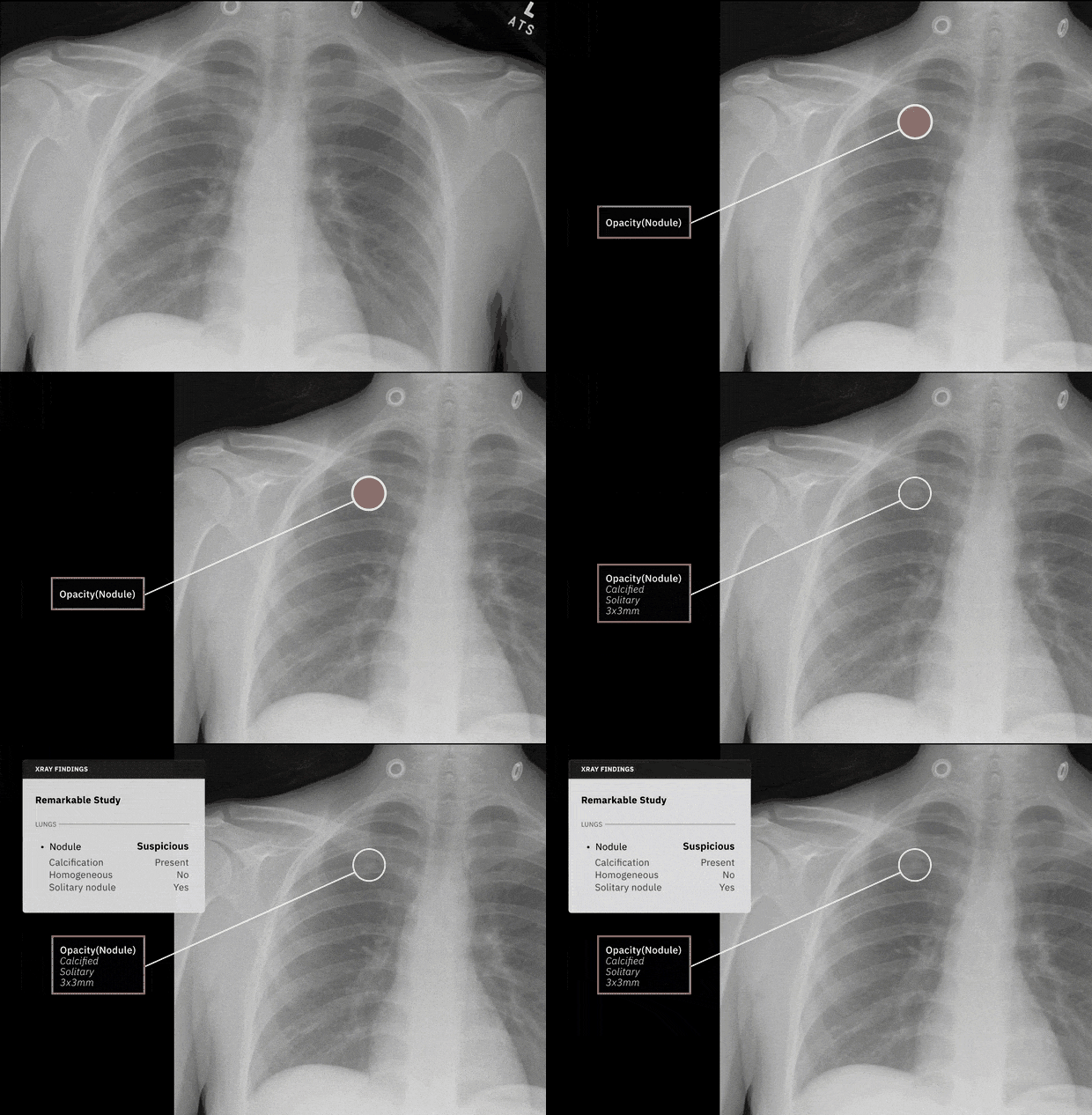
Our own baseline work found that 14% of chest radiographs reported as normal carry a missed finding across eight sites in the US and India. That is the number every report-based monitor quietly assumes away.
FAQ
Questions we get asked
Under a stated shift type. If only prevalence changed, sensitivity and specificity are preserved and the new prevalence is identifiable from the score distribution. If calibration holds, the confusion matrix follows from the scores. If acquisition shifted monotonically, aligning the score distribution restores the operating point. When none of these hold we say so, and a small targeted audit provides the number. Every estimate carries its assumption and its interval.
Get in touch
Request a briefing
We are opening a small number of pilot engagements with manufacturers, health systems and orchestration platforms. Tell us the device class, the number of sites, and the submission or review you are preparing for.
assurance@kuviyam.ai